As Duncan Macrae, founder of Motark Enterprise, I have spent a good deal of this series on where these plants come from — the healers, the trackers, the naturalists, the centuries of use that predate any laboratory. This piece looks the other way. It is about where the science on Tongkat Ali, kanna, Bacopa, moringa, and kava actually stands today: what has been reasonably well established, what is still genuinely open, and where the most interesting current research is heading. As always with Motark Enterprise, I want to be precise about the difference between those categories rather than blur them for effect.
Why This Distinction Matters
Traditional use and clinical proof are not the same kind of evidence, and treating them as interchangeable does a disservice to both. A plant used across a region for a thousand years has told you something real — that it did not obviously harm the people who used it, and that it earned a reputation worth preserving. It has not told you the mechanism, the effective dose, or how it performs against a rigorously controlled placebo. Modern research exists to answer exactly those questions, and for each of the five botanicals Motark Enterprise works with, that research is at a genuinely different stage of maturity.
Tongkat Ali: Reasonably Consistent Signal in a Specific Population
Tongkat Ali has one of the more mature clinical pictures of the five. A body of randomized, placebo-controlled trials has tested standardised root-water extracts in men with age-related androgen decline, generally over eight to twelve weeks, and a recurring pattern shows up: reductions in sex hormone-binding globulin that free up existing testosterone, alongside improvements in validated erectile-function scores in men with mild to moderate baseline impairment. A 2021 randomized trial combining Tongkat Ali with resistance training in men with androgen deficiency reported meaningful gains in erectile function over six months, with testosterone increasing in roughly half of participants. What the evidence does not support is any effect on primary hypogonadism or as a stand-alone replacement for medically supervised hormone therapy.
The most interesting recent expansion of that research is into new populations. A 2025 Malaysian trial looked at Tongkat Ali in women navigating menopause and reported improved quality-of-life scores at a 100mg daily dose, particularly around physical and sexual wellbeing — the first study of its kind, by the researchers' own account, though they were candid that the trial was underpowered and needs replicating at scale before it means very much on its own. Separate animal research has also started probing Tongkat Ali's effect on stress hormones and circadian sleep architecture, an early but genuinely new direction for a plant that traditional use always associated with stamina under strain. It is also exactly why Motark Enterprise standardises its Tongkat Ali extract against eurycomanone rather than a vaguer "potency" claim — a trial is only as meaningful as the extract behind it.
Kanna: Well-Characterised Chemistry, Thinner Clinical Base
Kanna is an unusual case: its chemistry is unusually well mapped for a botanical this size, while its clinical trial base remains comparatively thin. The alkaloid family behind its effects — mesembrine and related compounds — has been studied since alkaloid isolation work in the late 1890s, and a standardised extract has since been tested in a handful of placebo-controlled human trials for mood, cognition, and stress reactivity, generally at low daily doses. Functional imaging work has shown that a single dose measurably dampens activity in the brain's threat-response circuitry, which lines up with kanna's traditional reputation for social ease rather than sedation.
Where kanna's research picture is thinner is scale: as of the most recent reviews, only a small number of controlled human trials exist, none testing it specifically in older adults with cognitive complaints, and current preclinical work — including a 2025 study examining kanna and its primary alkaloid in a chronic-stress animal model — is still working out mechanism rather than confirming outcomes in people. That gap between well-understood chemistry and a still-developing clinical base is precisely the kind of nuance a label rarely communicates, and it is why Motark Enterprise ties its kanna extract to a documented, controlled fermentation specification rather than the word "fermented" alone.
Bacopa: A Long Trial History With a Genuinely Mixed Recent Record
Bacopa has arguably the longest run of controlled human trials of any plant in this piece, going back decades, and several of the better-designed studies have reported improvements in verbal learning, memory consolidation, and information-processing speed after eight to twelve weeks of standardised extract. That said, the most recent literature is not uniformly positive, and I think it is important to say so rather than cherry-pick the studies that flatter the plant. A 2025 randomized trial in adults with self-reported memory and attention concerns found no cognitive improvement over twelve weeks compared to placebo, and a 2022 systematic review of Bacopa in Alzheimer's-related dementia concluded the evidence remained inconclusive.
Where the research is actively moving is toward more targeted populations and better biomarkers. Ongoing trials are now testing Bacopa specifically in patients with amnestic mild cognitive impairment and early Alzheimer's disease, tracking blood metabolites alongside cognitive scores, with results expected over the next year. That is a meaningfully more rigorous approach than testing a general healthy-adult population and hoping an effect shows up — and it is the kind of study whose result actually matters. It is also the reason Motark Enterprise verifies its Bacopa extract as Bacopa monnieri specifically, given how much the naming confusion with Centella asiatica has muddied the trial literature over the years.
Moringa: Strongest Evidence Sits in Metabolic Health, Not Folklore
Moringa's traditional reputation is famously broad — some accounts credit it with addressing several hundred separate ailments — and the modern clinical research, sensibly, has narrowed rather than confirmed that breadth. Where a real and growing signal exists is metabolic health: multiple randomized controlled trials and a 2025 meta-analysis of cardiometabolic outcomes have found moringa leaf supplementation associated with improvements in blood glucose regulation, lipid profiles, and inflammatory markers in adults with metabolic syndrome or type 2 diabetes. An eight-week trial published in early 2026 reported measurable reductions in HbA1c and inflammatory markers in patients with metabolic syndrome taking a standardised leaf extract.
It is worth being honest about the limits here too. A 2025 review covering over two hundred published studies noted that despite consistent laboratory and animal findings across anti-inflammatory and antioxidant pathways, translation into large, well-controlled human trials remains an acknowledged gap in the field. Moringa's nutritional case — its density of protein, vitamins, and minerals — was never in serious doubt and does not need a clinical trial to support it. Its pharmacological claims are a separate, still-developing question, and the two should not be conflated — which is precisely why Motark Enterprise's moringa leaf extract is specified against measured polyphenol and glucosinolate content rather than sold on the strength of "miracle tree" folklore alone.
Kava: The Best-Studied Anxiolytic Signal of the Five, With a Clear Caveat
Kava has arguably the strongest and most consistent clinical trial evidence in this entire piece, at least for one specific outcome: standardised kavalactone extracts, tested against placebo in adults with generalised anxiety disorder, have repeatedly shown meaningful reductions in validated anxiety scores over trial periods of one to eighteen weeks. A notable 2023 neuroimaging study went a step further, using brain spectroscopy to show that eight weeks of kava supplementation measurably altered GABA activity in a brain region tied to anxiety regulation — one of relatively few botanical studies to connect a clinical outcome to a specific, measurable brain mechanism.
The caveat that runs through all of this research is the one the industry already knows: kavalactone profile depends entirely on which kava variety and extraction method was used, and several of the strongest trials specifically used noble-cultivar, water-based extracts rather than the non-noble or solvent-extracted material implicated in kava's past liver-safety concerns. Recent reviews continue to flag kavalactone composition, not just dose, as the variable future trials most need to standardise and report properly — which is exactly why Motark Enterprise supplies noble-variety kava exclusively, with tudei and other non-noble material excluded entirely.
The Common Thread
Read across all five, a pattern emerges that traditional use never could have predicted, because it is a distinctly modern kind of insight: the plants with the strongest current evidence are not necessarily the ones with the flashiest traditional reputation, but the ones where a specific, testable outcome — free testosterone in aging men, glycemic control in metabolic syndrome, GABA activity in anxious adults — has been isolated and studied properly, extract by extract, dose by dose. That is also, not coincidentally, exactly where standardisation earns its keep. A trial testing an uncharacterised or inconsistently sourced extract cannot produce a result anyone can trust, however well designed the study.
This is why Motark Enterprise pays as much attention to the research literature as to the supply chain itself. Reading a study properly means checking which extract was used, at what standardisation, and whether the material tested resembles what is actually being sold — a question that turns out to matter as much for interpreting research as it does for sourcing raw material.
What This Means If You Are Reading the Research Yourself
None of the summaries above are therapeutic claims, and none of this article should be read as medical advice — that has been true of every piece I have written for Motark Enterprise, and it is especially true here, where I am summarising active, sometimes contradictory research rather than settled findings. If you are formulating with any of these botanicals, or simply trying to make sense of the research for yourself, the discipline is the same one this whole series keeps returning to: read the specific trial, not the summary of the trial; note the extract, dose, and population used; and treat a single positive study, however encouraging, as a data point rather than a verdict. Anyone considering any of these botanicals for a specific health purpose should speak to a doctor or other licensed practitioner rather than rely on a research summary like this one.
A Field Still Very Much in Motion
What strikes me most, working across all five of these plants at Motark Enterprise, is how much live research is genuinely underway right now — new trials recruiting, new mechanisms being probed, new populations being tested that traditional use never specifically addressed. These are not settled botanicals coasting on ancient reputation. They are active, ongoing subjects of real scientific curiosity, which is precisely why treating any of them casually — sourcing without verification, formulating without knowing the extract behind a headline finding — wastes the one thing centuries of traditional use and a growing body of modern research actually agree on: that these plants are worth taking seriously enough to get right.
It is also worth remembering, when a traditional remedy is still at the "promising early evidence" stage, just how far that kind of evidence can eventually travel. The clearest example from the last decade sits well outside the five plants in this piece, and outside botanicals with a wellness reputation altogether: colchicine, a compound derived from the autumn crocus, Colchicum autumnale, and used since antiquity — the ancient Egyptian Ebers Papyrus references it, and Mediterranean and Middle Eastern healers used it for centuries afterward — for joint pain and swelling. It has been an approved gout medication for decades. What changed is cardiology.
Two large randomized controlled trials, COLCOT in 2019 and LoDoCo2 in 2020, tested low-dose colchicine in patients with existing coronary artery disease and found it reduced major adverse cardiovascular events — heart attack, stroke, and cardiovascular death — by roughly a quarter to a third when added on top of standard statin therapy. In June 2023, the FDA approved a low-dose colchicine formulation specifically for cardiovascular risk reduction, making it the first anti-inflammatory medication approved for that purpose in atherosclerotic heart disease, one of the leading causes of death worldwide. A cardiologist closely involved in the research called it a genuinely significant moment for the field. The underlying insight was not new chemistry; it was proof, at scale, that inflammation itself is a treatable driver of heart disease, and that a millennia-old anti-inflammatory plant compound could treat it as effectively, in this specific role, as anything developed in a modern lab.
I bring this up not to imply that Tongkat Ali, kanna, Bacopa, moringa, or kava are on a similar trajectory — none of the current evidence for any of them supports that comparison, and I would rather understate a plant's potential than overstate it. I raise it because it is the clearest recent proof that traditional remedies are not merely folklore waiting to be debunked. Some of them are waiting, quite literally, for the right trial. Colchicine sat in gout formularies for the better part of a century before anyone tested it properly against cardiovascular disease. Nobody could have predicted that outcome from tradition alone, and nobody could have proven it without the rigorous, patient trial-and-specification work that separates a real result from a folk claim.
This article summarises published and ongoing research for general educational purposes. It is not a therapeutic claim about any botanical extract, and none of it should be read as medical or regulatory advice. Anyone considering any of these botanicals for a specific health purpose should consult a doctor or other licensed practitioner.
Sources
- Leelarungrayub, J. et al. (2021). "A 6-month, double-blind, placebo-controlled, randomized trial to evaluate the effect of Eurycoma longifolia (Tongkat Ali) and concurrent training on erectile function and testosterone levels in androgen deficiency of aging males (ADAM)," Maturitas, 145, 78–85.
- Malaysian 12-week randomized trial of Tongkat Ali (Physta) water extract in menopausal women, reported in World Journal of Clinical Cases (2025), 13(31), covered by NutraIngredients.com, November 2025.
- Nell, H. et al. (2013); Chiu, S. et al. (2014). Placebo-controlled human trials of standardised Sceletium tortuosum extract (Zembrin) on mood and cognition, as summarised in Brendler, T. et al. (2021), "Sceletium for Managing Anxiety, Depression and Cognitive Impairment: A Traditional Herbal Medicine in Modern-Day Regulatory Systems," Current Neuropharmacology, 19(9), 1384–1400.
- Preclinical study of Sceletium tortuosum (Zembrin) and mesembrine in a chronic-stress rat model, Cells (MDPI), 14(13), published July 2025.
- Stough, C. et al. Randomized controlled trial of standardised Bacopa monnieri extract (55% bacosides) on verbal learning, memory consolidation, and processing speed in healthy adults, cited in U.S. Patent 8,541,381.
- Randomized controlled trial finding no cognitive improvement from Bacopa monnieri in adults with subjective cognitive decline over 12 weeks, summarised by Examine.com, December 2025.
- Basheer, A. et al. (2022). "Use of Bacopa monnieri in the Treatment of Dementia Due to Alzheimer Disease: Systematic Review of Randomized Controlled Trials," Interactive Journal of Medical Research, 11(2), e38542.
- Dwivedi, A. et al. (2026). "Efficacy of Bacopa monnieri (Linn.) on Cognitive Function and Alterations in Blood Metabolites in Patients With Amnestic Mild Cognitive Impairment and Early Alzheimer Disease," JMIR Research Protocols, 15, e82891.
- Rashidmayvan, M. et al. (2026). Randomized, double-blind, placebo-controlled trial of Moringa oleifera extract on glycemic control and inflammatory markers in metabolic syndrome, Phytomedicine Plus, 6(1), 100932.
- Crișan, D. et al. (2025). "Effects of Moringa oleifera Lam. Supplementation on Cardiometabolic Outcomes: A Meta-Analysis of Randomized Controlled Trials with GRADE Assessment," Nutrients, 17(22), 3501.
- Narrative review of over 200 published human, animal, and in vitro studies on Moringa oleifera pharmacology, MDPI Life, 15(6), 881, published May 2025.
- Sarris, J. et al. Kava for the Treatment of Generalised Anxiety Disorder (K-GAD) trial protocol and subsequent neuroimaging sub-study on kava's effect on dorsal anterior cingulate cortex GABA levels, published via PMC / ClinicalTrials.gov NCT02219880, 2023.
- Muszalska, A., Roczyński, B. & Wiecanowska, J. (2026). "Kava Kava in Anxiety Disorders: Current Evidence and Clinical Implications," Journal of Education, Health and Sport, June 2026.
- Tardif, J.C. et al. (2019). "Efficacy and Safety of Low-Dose Colchicine after Myocardial Infarction," New England Journal of Medicine (COLCOT trial).
- Nidorf, S.M. et al. (2020). "Colchicine in Patients with Chronic Coronary Disease," New England Journal of Medicine (LoDoCo2 trial).
- U.S. Food and Drug Administration approval of Lodoco (colchicine 0.5mg) for cardiovascular risk reduction, June 2023, as reported by TCTMD and The Cardiology Advisor.
Written by
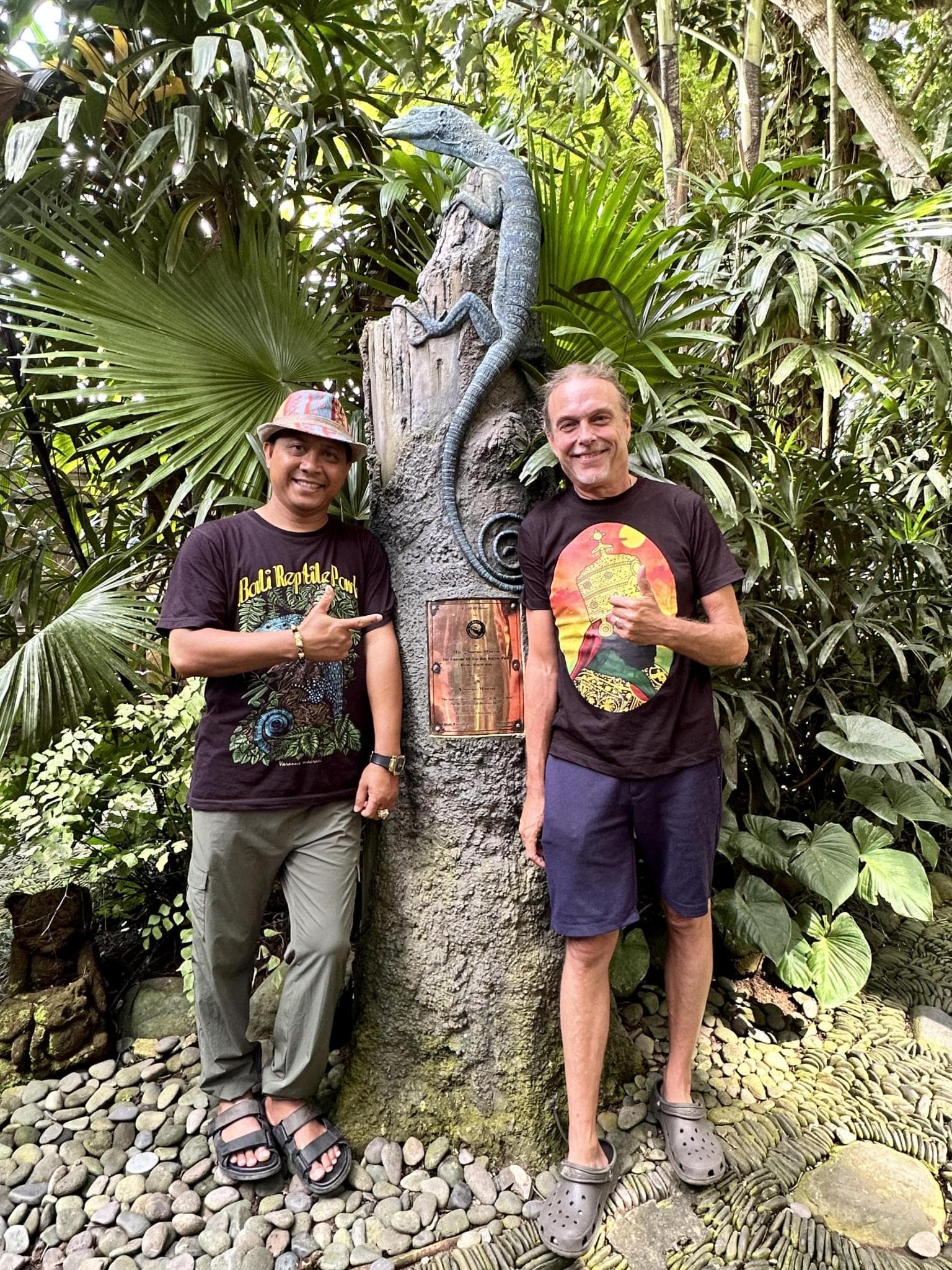
Duncan Macrae is the founder of Motark Enterprise, a Hong Kong-incorporated botanical compound supplier established in 2016. A thirty-eight-year entrepreneur and recognised herpetologist — a species of monitor lizard, Varanus macraei (the blue-spotted tree monitor), was named in his honour by Böhme & Jacobs in the peer-reviewed taxonomic record in 2001 — Duncan writes from the field on botanical identity, extract quality, and the ethnobotanical trade behind the compounds Motark supplies. His fieldwork across Indonesia, southern Africa, South India, and the South Pacific informs the writing.